Quiet weekday visit
Best for visitors who want relatively lighter crowds and a simpler darshan experience.

Temple visitor guide · South Delhi
Plan your visit to Kalkaji Mandir with practical information on temple timings, darshan, aarti, VIP darshan information, Delhi Metro access, directions, festivals and first-time visitor planning.
Opening hours do not necessarily mean uninterrupted darshan. Temporary ritual or cleaning breaks may occur.
About the temple
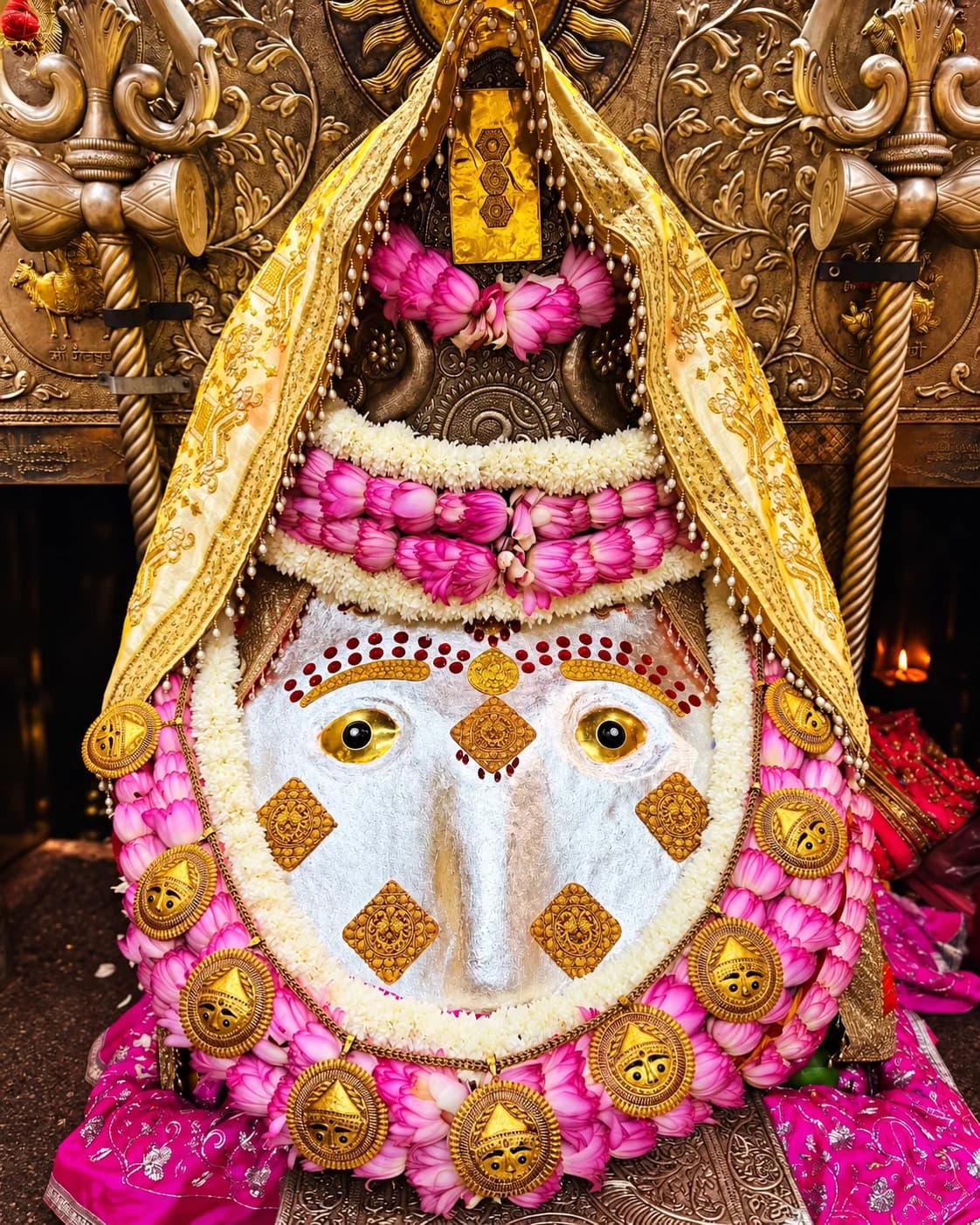
Kalkaji Mandir is one of South Delhi’s best-known temples dedicated to Maa Kalka. The temple is located near Nehru Place and Lotus Temple and is especially convenient for visitors because Kalkaji Mandir Metro Station connects with both the Violet and Magenta Lines.
The experience can vary considerably depending on when you visit. On an ordinary weekday morning, darshan is usually easier to manage. During Chaitra Navratri, Sharad Navratri, Ashtami, Navami, weekends and important Devi worship days, the surrounding lanes and darshan queues can become much busier.
This guide is designed to help visitors understand not only the broad opening hours, but also practical details such as ritual breaks, Metro access, crowd patterns, nearby attractions and first-time visitor planning.
Read about Kalkaji Mandir historyOpening hours
Kalkaji Mandir generally opens very early in the morning and remains active until late at night. A practical regular-day reference places the opening around 4:00 AM and closing around 11:30 PM.
However, visitors should not assume that darshan remains continuously available throughout the entire period. Short interruptions may occur for bhog, cleaning, aarti preparation and other ritual arrangements.
Regular temple timings for Kalkaji Mandir on normal days. Darshan may pause temporarily for bhog, cleaning, aarti preparation and other rituals.
| Temple activity | Approximate timing |
|---|---|
| Temple opens | Around 4:00 AM |
| Morning darshan | From around 4:00 AM |
| Midday bhog / ritual break | Temporary interruption may occur |
| Afternoon cleaning | Around 3:00 PM–4:00 PM |
| Evening darshan | Resumes afterward |
| Temple closes | Around 11:30 PM |
Planning around a specific ritual? Festival days and special occasions can follow different arrangements, so time-sensitive visits should be checked close to the travel date.
Darshan & aarti
Darshan may not remain open continuously from morning until night. Temporary pauses can take place for bhog, cleaning, aarti preparation and other temple rituals.
Visitors should also allow time for practical steps such as:
On ordinary days, these steps may be straightforward. During Navratri, Ashtami, weekends and major Devi worship days, they can take considerably longer.
Visitors travelling specifically for aarti should avoid arriving exactly at the expected ritual time. It is more practical to reach earlier because preparation periods and temporary access restrictions may begin before the aarti itself.
VIP darshan & priority entry
Regular Kalkaji Mandir darshan is free. If you are considering a VIP pass or priority entry, confirm the current arrangement with an authorised temple counter or help point before paying.
A Kalkaji Mandir VIP pass should not be assumed to be available every day. Priority arrangements may depend on temple administration, crowd conditions or festival access controls; they are different from the free regular darshan queue.
Different third-party pages may quote different amounts. No fixed, permanent Kalkaji Mandir VIP Darshan price is confirmed in this guide. A quoted Kalkaji Mandir VIP ticket price may relate to an older arrangement, a festival period or a separate puja service—not a current standard entry charge.
For Kalkaji Mandir VIP booking, do not assume a permanent official portal exists. Kalkaji Mandir VIP Darshan online booking offers should be used only when their authorisation and validity for your visit can be clearly confirmed.
Kalkaji Mandir Navratri VIP Darshan arrangements may differ from ordinary days. Heavy crowds, security checks and temporary routes can still mean a wait; paying for a pass should not be treated as a guarantee of immediate darshan.
Families with elderly visitors, limited mobility, young children or other assistance needs can ask an authorised help point about the day’s support. Do not assume automatic free VIP entry or a permanent special queue.
Unofficial agents: Avoid unofficial agents promising guaranteed queue skipping or direct darshan. Before paying, check who is collecting the money, whether the arrangement is authorised today, whether a proper receipt is available and whether the charge is for a separate ritual service. Regular darshan itself is free.
| Topic | Current guidance |
|---|---|
| Regular darshan | Free; no regular entry fee. |
| VIP / priority entry | Availability can vary; ask an authorised counter or help point. |
| VIP ticket price | No permanent official rate is confirmed here. |
| Online VIP booking | Do not assume a standard, year-round official system. |
| Navratri arrangements | Confirm close to travel; festival access controls can change. |
| Accessibility assistance | Ask about current support; VIP entry is not guaranteed. |
Yes. Regular darshan and normal entry are free. Optional offerings, donations and separate puja services are different from an entry charge.
No single permanent official price is confirmed in this guide. Verify any quoted amount and the service it covers with an authorised temple counter or help point.
Do not assume a permanent official online booking system. Use a facility only when its authorisation, current availability and validity for your visit can be confirmed.
Do not treat it as a guarantee. Crowd controls, security checks and temporary access arrangements may still involve waiting.
Best time to visit
For visitors mainly interested in a relatively peaceful darshan experience, an ordinary weekday early morning is generally one of the most convenient choices.
Early visits can offer several practical advantages:
Best for visitors who want relatively lighter crowds and a simpler darshan experience.
Arrive before the expected ritual or preparation period rather than reaching exactly at aarti time.
Choose this if the festival atmosphere is the priority, but expect much larger crowds and controlled movement.
Prefer quieter periods, allow extra time and ask the authorised temple help point about any assistance available on the day.
Transport
For many visitors, Delhi Metro is the easiest way to reach Kalkaji Mandir.
The temple is within walking distance of the station. During Navratri and other heavily crowded occasions, barricades or crowd-control routes may make the actual walking route longer than it appears on a map.
Visitors arriving through major railway stations such as Hazrat Nizamuddin or New Delhi Railway Station can continue by Metro, auto-rickshaw, taxi or app-based cab. Metro travel can often be more predictable than travelling entirely by road during peak Delhi traffic.
Taxi, cab and auto-rickshaw are practical options, but road travel times can vary significantly depending on traffic and festival conditions.
Parking is available in the surrounding area, but driving can become inconvenient during heavily crowded periods. For many visitors, Metro is simpler.
Entry & first-time visitors
There is no normal entry fee for devotees joining the regular darshan queue. Visitors may still choose to spend separately on:
These optional expenses should not be confused with entry charges.
The temple approach and queue areas are easier to manage with minimal luggage, particularly during crowded periods.
Comfortable and modest clothing is suitable for the temple. Visitors may spend time standing in queues and will need to remove footwear before entering the worship area.
Different third-party sources mention different VIP or priority-darshan prices. Do not present any fixed price as an official permanent rate unless it has been directly verified.
If priority arrangements are important to a visitor, advise checking with an authorised temple counter or help point.
What devotees commonly offer
Common traditional offerings include:
Shops selling flowers, prasad and puja items are available around the temple area.
Visitors do not need to purchase an expensive puja package for normal darshan.
How much time to keep
On a normal weekday, keeping approximately 45–90 minutes for the complete temple visit can be a reasonable planning estimate. This can include:
This is a planning estimate, not a guaranteed waiting time. Weekends, Ashtami, Navami, public holidays and Navratri can require considerably more time.
Tradition & significance
Kalkaji Mandir is dedicated to Maa Kalka, a form of the Divine Mother associated with the worship of Goddess Kali.
The temple is traditionally regarded by devotees as a Siddha Peetha, and the name Manokamna Siddha Peetha is also associated with the shrine.
When discussing the history of Kalkaji Mandir, it helps to distinguish carefully between religious tradition and recorded architectural history.
What devotees hold sacred: the shrine’s dedication to Maa Kalka and its traditional standing as a Siddha Peetha.
The present temple building should not be presented as a precisely documented surviving structure from ancient epic periods without reliable evidence.
Lotus Temple & nearby places
One of the advantages of Kalkaji Mandir’s location is that visitors can combine the temple with other destinations in South Delhi.
Kalkaji Mandir and Lotus Temple are close enough to be planned in the same trip, but they operate independently and have different visitor schedules.
A practical approach can be:
Another nearby spiritual destination that can be considered as part of a South Delhi visit.
A useful nearby transport and commercial landmark.
A route into the separate guide to other temples around the area.
Common first-time mistakes
Temporary ritual and cleaning breaks may occur.
Third-party claims vary and should not be presented as guaranteed official pricing.
The temple is easier to navigate with minimal belongings.
Festival periods can involve significantly larger crowds.
Kalkaji Mandir Metro Station serves both the Violet and Magenta Lines.
Kalkaji Mandir generally opens around 4:00 AM and remains active until approximately 11:30 PM. Darshan may pause temporarily for bhog, cleaning, aarti preparation and other rituals.
Yes. Regular darshan is free. Flowers, prasad, puja materials, donations and optional ritual services are separate expenses.
Kalkaji Mandir Metro Station is the nearest station and is served by both the Violet Line and Magenta Line.
For relatively lighter crowds, an ordinary weekday early morning is generally a good choice.
Yes. Navratri is one of the temple’s busiest periods and can involve longer queues and special crowd-management arrangements.
Yes. Kalkaji Mandir and Lotus Temple are close enough to be included in the same South Delhi trip.
Not necessarily. Temporary ritual and cleaning breaks may occur during the broader temple opening period.
Parking options exist in the surrounding area, but Metro can be easier during crowded periods.
Latest articles
Planning a visit to Kalkaji Mandir is easier once you understand one important detail: the temple remains open for long hours, but darshan is not continuous throughout the day. On normal days, Kalkaji Mandir generally opens around 4:00 AM and closes around 11:30 PM. Between these hours, short pauses may take place for bhog, cleaning, […]
Read articleIf you are travelling to Kalkaji Mandir in Delhi, the nearest metro station is Kalkaji Mandir Metro Station. The station serves both the Violet Line and Magenta Line, making Metro one of the simplest ways to reach the temple from different parts of Delhi and NCR. Kalkaji Mandir is within walking distance of the metro […]
Read articleVisitors planning a trip to Kalkaji Mandir often search for VIP darshan, priority entry, VIP pass prices and online booking before reaching the temple. The most important thing to know is simple: regular darshan at Kalkaji Mandir is free. Information about a permanent paid VIP darshan system, however, is much less consistent. Different third-party websites […]
Read article